



Search
Related News
- 00
0000-00
When do lower limb exoskeleton systems improve stroke rehabilitation? - 00
0000-00
When do transfer robot systems improve safety in patient handling? - 00
0000-00
How elderly health technology companies are shaping aging-in-place care - 00
0000-00
What FDA regulatory certification means for Class II medical devices - 00
0000-00
How nursing homes can choose senior emergency alert systems that staff will use
How wearable health monitors affect long-term upkeep




For after-sales teams, understanding how wearable health monitors shape long-term upkeep has become a practical priority. In elderly care, reliability is never a minor feature.
These devices now support fall prevention, remote observation, medication routines, and early warning for physical decline. Their maintenance demands are growing with their clinical and daily living value.
Within accessibility systems, long-term service quality depends on far more than replacing a battery. Sensor drift, skin contact issues, firmware compatibility, and charging behavior all affect outcomes.
As EHAS tracks smart aging technologies, one pattern stands out. The success of wearable health monitors increasingly depends on upkeep strategies designed for years, not weeks.
Why wearable health monitors are moving from convenience tools to critical care infrastructure
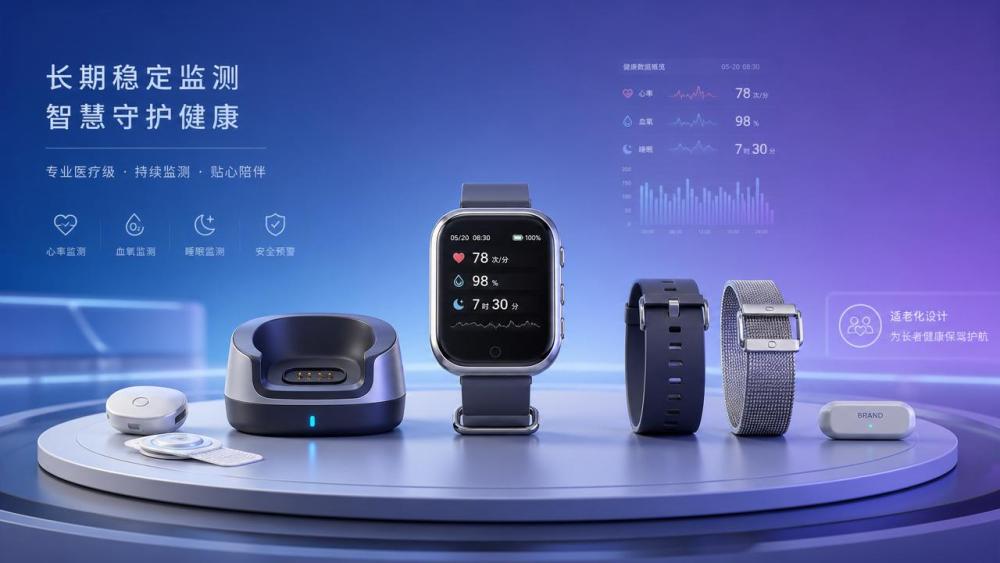
A few years ago, many wearables were treated as optional wellness gadgets. Today, they are becoming embedded in broader safety and accessibility ecosystems for older adults.
A wrist device may now connect with nurse alerts, fall-detection workflows, geofencing systems, or home accessibility platforms. That shift raises the stakes for long-term upkeep.
When wearable health monitors fail, the result is not only inconvenience. It may create missed warnings, false alarms, poor compliance, and a loss of trust in connected care systems.
This trend is especially visible in elderly-friendly environments. Aging users need stable performance despite fragile skin, irregular routines, changing mobility, and limited tolerance for technical friction.
The strongest trend signals behind long-term upkeep demands
Several market and technology signals explain why maintaining wearable health monitors is becoming a long-horizon service challenge rather than a simple support task.
These signals show why the upkeep of wearable health monitors now belongs in long-term service planning. It can no longer be treated as occasional technical support.
What actually drives upkeep complexity in wearable health monitors
The main drivers are physical wear, software evolution, biological variability, and care-environment diversity. Each one affects performance in a different but compounding way.
1. Sensor accuracy changes over time
Optical heart-rate modules, skin temperature sensors, motion detectors, and ECG contacts do not perform identically forever. Sweat, dust, micro-scratches, and loose fit degrade readings.
For elderly users, frail skin and circulation differences may further complicate signal quality. Maintenance therefore includes cleaning standards, fit checks, and periodic calibration verification.
2. Battery health shapes reliability more than many teams expect
Battery decline often arrives gradually. Shorter runtime, unstable charging, and voltage fluctuation can trigger unexpected shutdowns or missing records.
In wearable health monitors, battery wear is not just a hardware issue. It affects alert continuity, user compliance, and confidence in the entire monitoring routine.
3. Software updates improve value but raise service risk
Updates may strengthen algorithms, add languages, improve fall detection, or patch security issues. But they can also disrupt pairing, interfaces, or older companion devices.
Long-term upkeep must include version control, rollback planning, staged deployment, and update communication that remains simple for home-based users.
4. Daily wear behavior changes device lifespan
Many failures begin with ordinary behavior. Wearing a device too loosely, charging with the wrong cable, exposing it to steam, or skipping cleaning can gradually reduce performance.
This is why wearable health monitors need maintenance education as much as technical servicing. Good upkeep starts with realistic, repeatable daily habits.
How long-term upkeep affects key business and care workflows
The maintenance quality of wearable health monitors influences multiple service layers. The effects appear in operations, user experience, data quality, and risk management.
- Support teams face more cases related to pairing, charging, and false alerts.
- Care environments experience alarm fatigue when upkeep is inconsistent.
- Data platforms lose value when records become incomplete or noisy.
- Safety programs weaken when fall detection or vital-sign alerts become unreliable.
- Brand trust drops when devices seem accurate at launch but unstable over time.
In accessibility-focused sectors, these consequences are amplified. Devices often support vulnerable users who depend on predictable alerts and low-friction routines.
That makes upkeep a strategic function. It protects not only hardware life, but also dignity, independence, and confidence in assisted living technologies.
The upkeep priorities that deserve the closest attention now
Current service priorities should focus on the failure points that most often reduce long-term performance in wearable health monitors.
- Battery lifecycle tracking: monitor charging cycles, runtime decline, and replacement timing.
- Sensor contact quality: inspect straps, electrodes, and skin-contact surfaces regularly.
- Cleaning protocols: define safe routines for sweat, soap residue, dust, and disinfectants.
- Firmware governance: verify compatibility before broad updates across connected systems.
- Alert validation: compare flagged events with real-world outcomes to catch drift.
- User habit reinforcement: simplify charging, wearing, and syncing instructions.
- Accessory replacement planning: stock straps, chargers, clips, and contact patches.
These priorities are especially relevant where wearable health monitors connect with hearing aids, mobility tools, smart bathrooms, or remote caregiver dashboards.
Practical ways to respond as upkeep expectations continue rising
A stronger response begins with structured maintenance planning rather than reactive repair. The goal is to prevent hidden decline before it affects safety or service costs.
For organizations following silver-economy technology trends, the next competitive edge may come from service durability, not only device innovation.
That is particularly true for wearable health monitors supporting older adults, where long-term trust matters as much as first-day functionality.
What to watch next in the future of wearable health monitors upkeep
The next phase will likely feature predictive maintenance, better self-diagnostics, and tighter links between wearable data and broader accessibility systems.
Devices may soon flag declining battery integrity, poor skin contact, or unusual sensor behavior before users notice obvious problems. That would reduce service disruption significantly.
There is also growing value in designing upkeep around the whole environment. A monitor should be maintained in relation to wheelchairs, rehab devices, hearing support, and home safety platforms.
The long-term lesson is clear. Wearable health monitors are not static gadgets. They are living service assets that require ongoing attention, structured upkeep, and smart operational judgment.
To improve outcomes, start with a simple audit. Review battery aging, sensor cleanliness, update workflows, accessory wear, and alert accuracy across the device lifecycle.
That practical next step can reveal hidden service risks early. It also helps build safer, more dependable monitoring experiences for aging populations and accessibility-focused care systems.
Related News
- EU MDR Tightens Clinical Evidence for Class IIa Devices, ECG Smartwatches Need PEPAug 17, 2026Geriatric Tech Fellow
- EU Ends Duty Relief for Parcels Under EUR150, Raising Import Costs for Medical WearablesAug 16, 2026Geriatric Tech Fellow
- FDA Tightens ECG Smartwatch Submission RulesAug 11, 2026Geriatric Tech Fellow
- FDA Tightens 510(k) Filing Steps for ECG SmartwatchesAug 06, 2026Geriatric Tech Fellow