



Search
Related News
- 00
0000-00
When do lower limb exoskeleton systems improve stroke rehabilitation? - 00
0000-00
When do transfer robot systems improve safety in patient handling? - 00
0000-00
How elderly health technology companies are shaping aging-in-place care - 00
0000-00
What FDA regulatory certification means for Class II medical devices - 00
0000-00
How nursing homes can choose senior emergency alert systems that staff will use
What to compare before buying wearable health tech




Before investing in wearable health tech, buyers should compare more than price and brand. Accuracy, comfort, battery life, data security, compliance, integration, and long-term support all affect real-world value and procurement success. For organizations serving aging populations, the right device must balance medical-grade reliability with user-friendly design, helping reduce risk, improve monitoring outcomes, and support safer, more independent living.
What should buyers compare first in wearable health tech procurement?
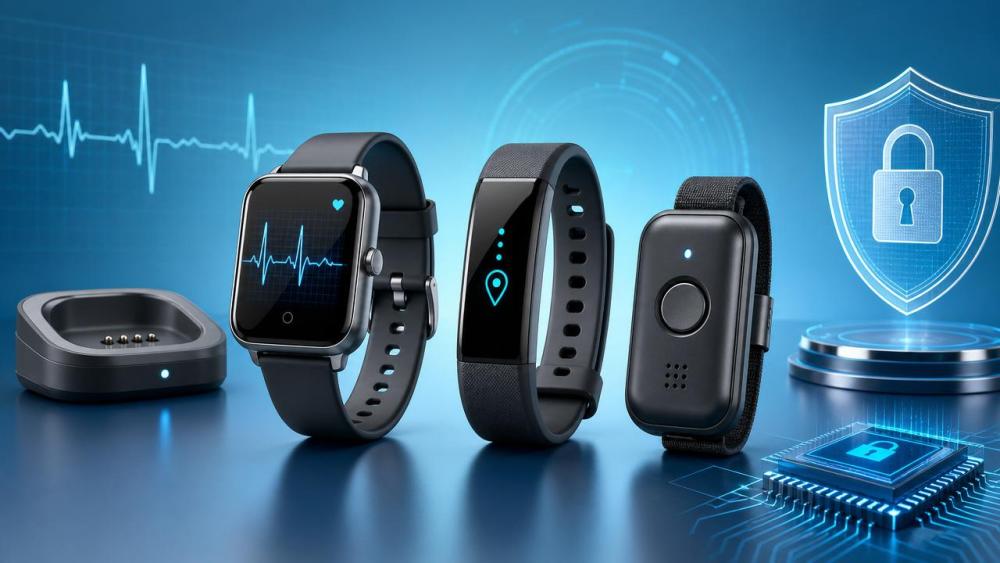
For procurement teams, wearable health tech is not a simple consumer electronics purchase. In elderly care, rehabilitation, home monitoring, and accessibility programs, device failure can affect safety, response speed, and care quality.
That is why comparison should start with use case clarity. A GPS tracker for dementia wandering risk, an ECG watch for remote cardiac observation, and a fall-detection wearable for assisted living each require different thresholds for sensitivity, comfort, and alert logic.
EHAS closely tracks this convergence between assistive technology and wearable monitoring. In the aging economy, buyers increasingly need products that connect with wheelchairs, rehab systems, nursing workflows, hearing support, and accessible living infrastructure rather than operate as isolated gadgets.
- Define the core risk to be managed: falls, wandering, missed vital-sign changes, poor adherence, or caregiver overload.
- Map the user profile: frail elderly users, stroke survivors, hearing-impaired seniors, or residents in assisted living facilities.
- Check workflow fit: who receives alerts, who charges devices, who reviews dashboards, and who acts on abnormal readings.
- Estimate total lifecycle value, not only unit price, including training, replacements, platform fees, and support responsiveness.
Which wearable health tech criteria matter most for elderly care and accessibility scenarios?
Buyers often ask for a short checklist. In practice, the best wearable health tech decisions come from weighted comparison across technical, clinical, operational, and human factors.
The table below helps procurement teams compare devices for aging-related use cases where safety, compliance, and daily wear acceptance are equally important.
For elderly-care procurement, measurement accuracy and wearability usually deserve the highest weighting. A highly featured device that users remove after two hours often delivers less value than a simpler wearable health tech product with stable adherence.
Why comfort is a procurement issue, not just a user preference
Older adults may have fragile skin, arthritis, cognitive decline, or limited tolerance for frequent charging and screen prompts. Procurement teams should therefore test clasp strength, strap texture, screen contrast, vibration intensity, and one-hand operation before placing volume orders.
Why alert quality is more important than feature quantity
Too many false alerts overwhelm nursing stations and family caregivers. Too few alerts increase incident risk. The better question is not how many features a wearable health tech device offers, but whether its alerts match the organization’s response workflow.
How do common wearable health tech categories compare?
Not all wearable devices serve the same procurement goal. Buyers should compare device class against the intended operating environment and care objective instead of using a single generic checklist for every tender.
This comparison table shows where different wearable health tech types typically fit in elderly care, remote monitoring, and accessibility-oriented deployments.
Procurement teams serving older adults often combine device categories. For example, a fall-detection wearable may work best when paired with bathroom safety infrastructure, while a GPS tracker may need integration with caregiver apps and call-center escalation rules.
Which technical specifications deserve deeper review before buying?
Specification sheets can look impressive, but buyers should translate technical claims into operational questions. This is especially true for wearable health tech used in aging populations, where real-life conditions differ from controlled demos.
Sensor performance and signal reliability
Ask how the device behaves during walking, transfers, tremors, perspiration, or loose fit. Optical heart-rate sensors, SpO2 modules, motion sensors, and skin-contact electrodes can all degrade under daily use conditions common among seniors.
Battery behavior in actual care routines
A vendor may quote long runtime under limited features. Buyers should verify runtime when GPS, fall alerts, vibration prompts, continuous measurement, or cellular connectivity are enabled. Charging simplicity matters as much as battery size.
Durability, ingress protection, and cleaning tolerance
In elderly care, wearable health tech may be exposed to handwashing, shower steam, accidental drops, and routine disinfection. Check sealing level, strap replacement options, screen scratch resistance, and approved cleaning procedures.
Interoperability with wider care systems
EHAS follows a broader ecosystem view: wearables create more value when linked with mobility devices, accessibility alarms, nursing operations, and remote observation platforms. Ask whether APIs, data export tools, or dashboard integrations are available.
- Can alerts flow to a nurse station, family app, or case management platform?
- Can data be segmented by facility, room, or care program?
- Can the device work alongside hearing aids, smart beds, or transfer assistance workflows?
How should procurement teams assess compliance, privacy, and risk?
For wearable health tech, compliance is often the difference between a scalable rollout and a stalled procurement. Buyers should separate wellness-grade claims from regulated medical use, then evaluate whether vendor documentation matches the intended market and application.
The table below outlines practical checkpoints for compliance-sensitive purchasing decisions.
EHAS pays close attention to cross-border compliance realities in aging-tech markets, including medical-device pathways, accessibility expectations, and operational safety demands. For buyers, this means compliance should be reviewed together with user scenario, not after vendor shortlisting.
How can buyers avoid common mistakes when comparing wearable health tech?
Many procurement setbacks come from preventable assumptions. Teams may focus on headline features, overlook caregiver workflow, or underestimate post-sale support. In elderly-focused deployment, those mistakes become costly very quickly.
- Do not treat consumer popularity as proof of care suitability. A fashionable watch may be poor at all-day wear in frail populations.
- Do not compare only hardware price. Subscription fees, SIM costs, dashboard licenses, replacement accessories, and onboarding time change the true budget.
- Do not assume alerts equal outcomes. Response responsibility, timing, and escalation rules must be defined before rollout.
- Do not skip pilot testing with actual elderly users. Comfort, adherence, and charging behavior often differ from office evaluations.
- Do not ignore compatibility with broader accessibility systems such as bathroom safety alerts, nursing beds, transfer routines, or rehab workflows.
What procurement process works best for wearable health tech projects?
A structured process helps buyers reduce rework and vendor mismatch. This is especially important when the wearable health tech project supports older adults across multiple care settings.
Recommended buying sequence
- Clarify target scenario and risk level, such as wandering prevention, post-stroke monitoring, or independent living support.
- Set weighted evaluation criteria covering accuracy, comfort, battery, connectivity, compliance, and service support.
- Request documentation for device specifications, support model, update policy, and regional market readiness.
- Run a pilot with representative users, caregivers, and daily workflow observers.
- Review pilot findings against adoption, incident response, maintenance burden, and data usefulness before scaling.
This sequence is where sector intelligence matters. EHAS monitors how wearable devices connect with smart mobility, hearing support, rehabilitation robotics, and accessibility infrastructure, helping buyers compare solutions as part of a larger elderly-tech system rather than a one-off purchase.
FAQ: what do buyers ask most about wearable health tech?
How do I know whether a wearable health tech device is suitable for elderly users?
Start with physical and cognitive usability. Check strap closure strength, display readability, vibration notice clarity, charging simplicity, and tolerance for all-day wear. Then assess whether alerts fit caregiver response capacity and whether the device can remain useful in bathrooms, bedrooms, and community settings.
What matters more: more sensors or better reliability?
For most procurement cases, better reliability wins. Extra sensors add little value if data quality drops during movement, if users stop wearing the device, or if staff cannot interpret the output. Stable performance and consistent adherence usually produce stronger outcomes.
Should wearable health tech be bought as a standalone product or part of a broader solution?
For elderly care and accessibility projects, broader solutions tend to create more value. A wearable works better when linked with mobility support, fall-response systems, remote dashboards, hearing assistance, or home accessibility upgrades. This systems view is central to successful aging-tech procurement.
What support questions should be included in supplier review?
Ask about onboarding materials, firmware updates, spare parts, replacement turnaround, battery policy, multilingual instructions, dashboard training, and technical escalation windows. Post-sale responsiveness often determines whether a pilot can scale into a dependable care program.
Why choose us for wearable health tech sourcing insight and project planning?
EHAS brings a system-level view to wearable health tech decisions in the silver economy. Our focus is not limited to device features. We track how wearables interact with smart wheelchairs, rehab robots, hearing aids, transfer support, bathroom safety, and independent-living infrastructure.
That perspective helps procurement teams compare solutions with more precision, especially when elderly safety, accessibility, and care continuity are at stake. Instead of evaluating devices in isolation, buyers can assess technical fit, compliance exposure, user acceptance, and deployment practicality together.
- Consult us for parameter confirmation if you need to compare battery, sensor type, alert logic, waterproofing, or connectivity options.
- Contact us for product selection if you are choosing between GPS trackers, ECG watches, fall-detection wearables, or hearing-related smart devices.
- Discuss delivery timelines and rollout planning if your project involves facilities, distributors, pilot programs, or cross-border procurement.
- Request support on certification expectations, sample evaluation priorities, and solution matching for elderly-care or accessibility environments.
- Use EHAS insight when you need a more complete comparison between standalone wearable health tech and integrated aging-tech solutions.
If your team is preparing a tender, screening suppliers, or refining a pilot plan, the most useful next step is a focused discussion around product selection, technical parameters, compliance questions, sample review, and quotation structure. That makes wearable health tech procurement safer, clearer, and more aligned with real elderly-care outcomes.
Related News
- How nursing homes can choose senior emergency alert systems that staff will useSep 09, 2026Geriatric Tech Fellow
- FDA Sets EMC Test Rule for GPS Care WearablesJul 23, 2026Geriatric Tech Fellow
- Wearable Health Tech Devices in 2026: Which Features Will Matter MostJul 12, 2026Geriatric Tech Fellow
- GPS Tracking Bracelets for Elderly: Battery Life, Accuracy, and Alert CostsJul 01, 2026Geriatric Tech Fellow