




Search
Related News
- 00
0000-00
When do lower limb exoskeleton systems improve stroke rehabilitation? - 00
0000-00
When do transfer robot systems improve safety in patient handling? - 00
0000-00
How elderly health technology companies are shaping aging-in-place care - 00
0000-00
What FDA regulatory certification means for Class II medical devices - 00
0000-00
How nursing homes can choose senior emergency alert systems that staff will use
Where gerontechnology creates the strongest retail demand




Gerontechnology is creating the strongest retail demand where aging populations, safety needs, and premium home-care solutions intersect. For distribution growth, the clearest momentum appears in smart mobility, rehab robotics, digital hearing aids, and fall-prevention systems. As the global silver economy expands, understanding where gerontechnology turns urgent care needs into repeatable product demand is essential for sustainable market positioning.
Gerontechnology and the Core Logic of Retail Demand
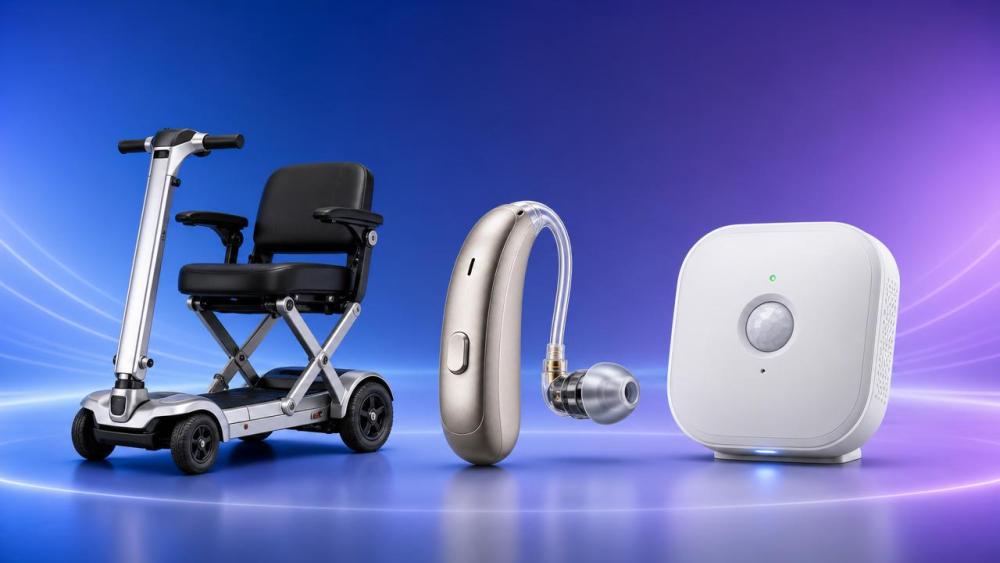
Gerontechnology refers to technology designed for aging populations and disability support. It combines healthcare, mobility, safety, accessibility, and digital monitoring into practical daily-use solutions.
Retail demand becomes strongest when products solve immediate, visible, and emotionally important problems. In gerontechnology, those problems are movement, falls, hearing loss, and caregiver burden.
This is why gerontechnology is not only a healthcare topic. It is also a broad commercial category linked to housing upgrades, family spending, rehabilitation services, and aging-in-place lifestyles.
The strongest categories usually share four traits:
- A clear daily pain point
- A measurable safety or convenience benefit
- A high willingness to pay for independence
- A replacement or upgrade cycle
For EHAS-focused sectors, gerontechnology demand is strongest where hardware, sensors, and intelligent assistance directly improve autonomy and reduce risk at home or in care settings.
Market Signals Showing Where Gerontechnology Sells Fastest
Retail momentum in gerontechnology is shaped by demographic pressure and product practicality. Aging households spend faster on solutions that prevent emergencies and reduce long-term care dependence.
Several signals explain why some categories outperform others:
These signals show that gerontechnology demand is strongest where product benefits are immediate, visible, and easy to explain within family decision cycles.
The Retail Categories with the Strongest Gerontechnology Demand
Among all elderly-tech segments, four categories consistently convert need into retail sales. They align with the most common risks in later life.
Smart Mobility Wheelchairs and Scooters
Mobility remains the most visible use case for gerontechnology. Demand rises when products restore confidence, extend outdoor activity, and reduce dependence on others.
Retail strength is highest in lightweight carbon-fiber models, compact folding designs, and all-terrain devices with strong battery performance and easy transport features.
Advanced options such as Mecanum wheel steering or stair-assist technology attract premium interest because they turn mobility from basic transport into freedom of movement.
Exoskeletons and Rehab Robots
Gerontechnology demand in rehab is growing from clinic-led adoption into broader family awareness. Recovery after stroke, injury, or weakness creates strong urgency.
Exoskeleton systems, robotic gait trainers, and soft rehabilitation devices deliver retail potential when positioned around measurable progress, guided therapy, and safer repetitive training.
This category often has a longer education cycle. However, its value rises sharply in regions with advanced rehabilitation culture and rising home-recovery expectations.
Digital Hearing Aids and Sensory Support
Hearing support is one of the most scalable gerontechnology categories. Hearing loss is widespread, socially disruptive, and closely connected to quality of life.
Retail demand is strongest for digital hearing aids with noise filtering, speech enhancement, discreet design, rechargeable batteries, and app-based adjustment features.
Products that improve restaurant conversations, family interaction, and television listening tend to convert faster because users feel the benefit immediately.
Fall-Prevention and Accessibility Safety Systems
Few gerontechnology segments have stronger emotional urgency than fall prevention. Bathrooms, stairs, and transfer zones are high-risk spaces with direct safety implications.
Demand is especially strong for grab bars, anti-slip accessibility fixtures, smart alerts, millimeter-wave fall detection, and privacy-safe monitoring systems.
This category works well because it combines affordable entry products with premium upgrade paths, including connected alarms and whole-home accessibility integration.
Where Gerontechnology Creates the Best Commercial Value
The strongest gerontechnology demand does not appear everywhere equally. It performs best where practical need, purchasing power, and acceptance of assisted living technology overlap.
The most promising demand environments include:
- Urban aging households seeking safer independent living
- Middle- and high-income families funding home-care upgrades
- Post-acute recovery settings transitioning patients home
- Senior living spaces needing better mobility and safety equipment
- Cross-border e-commerce channels serving aging Western consumers
In these settings, gerontechnology is not seen as optional electronics. It is viewed as a tool for preserving dignity, reducing accidents, and controlling future care costs.
EHAS highlights a key commercial pattern here. The most resilient demand often comes from products bridging medical-grade safety with consumer-friendly usability and design.
Typical Gerontechnology Scenarios by Use Case
Different gerontechnology products perform differently depending on the care scenario. Matching the product to the right use case improves conversion and long-term satisfaction.
This scenario-based view makes gerontechnology easier to evaluate because demand becomes linked to concrete daily routines rather than abstract innovation claims.
Practical Considerations for Sustainable Gerontechnology Growth
Strong demand alone does not guarantee sustainable performance. Gerontechnology requires attention to compliance, user experience, after-sales support, and education.
Several practical priorities stand out:
- Focus on products with clear installation, training, and maintenance pathways.
- Prioritize safety certification and region-specific regulatory readiness.
- Evaluate whether benefits can be demonstrated within minutes.
- Support premium categories with strong content and education.
- Bundle products around care scenarios, not isolated features.
In gerontechnology, adoption improves when products feel less clinical and more empowering. Design, comfort, and simplicity influence retail outcomes as much as technical capability.
This is especially relevant for EHAS-aligned sectors, where advanced sensors, intelligent mechanics, and accessibility engineering must translate into everyday trust.
A Practical Next Step for Evaluating Gerontechnology Opportunities
The strongest gerontechnology demand is concentrated in products that protect independence, prevent falls, support rehabilitation, and restore sensory connection.
A practical next step is to map demand by scenario: mobility loss, bathroom safety, hearing decline, home recovery, and caregiver assistance. This quickly reveals the most resilient categories.
From there, compare products by urgency, repeatability, service requirements, and regulatory fit. That approach turns gerontechnology from a broad trend into a structured growth strategy.
As the silver economy expands, gerontechnology will create its strongest retail demand wherever technology clearly protects dignity, extends autonomy, and makes aging safer at home.
Related News
- How elderly health technology companies are shaping aging-in-place careSep 11, 2026Mr. Julian Thorne
- What Drives Medical-Grade Assistive Products Cost in Long-Term Care Procurement?Aug 10, 2026Mr. Julian Thorne
- How to Evaluate Health-Tech Innovations Investment Across Risk, ROI, and RegulationAug 06, 2026Mr. Julian Thorne
- How Japan Is Building Silver Economy Solutions for Aging in PlaceAug 01, 2026Mr. Julian Thorne